(Available 2026)
Nick was seven years old.
He lived by the sea in Amsterdam, where boats rocked and nets dried in the sun.
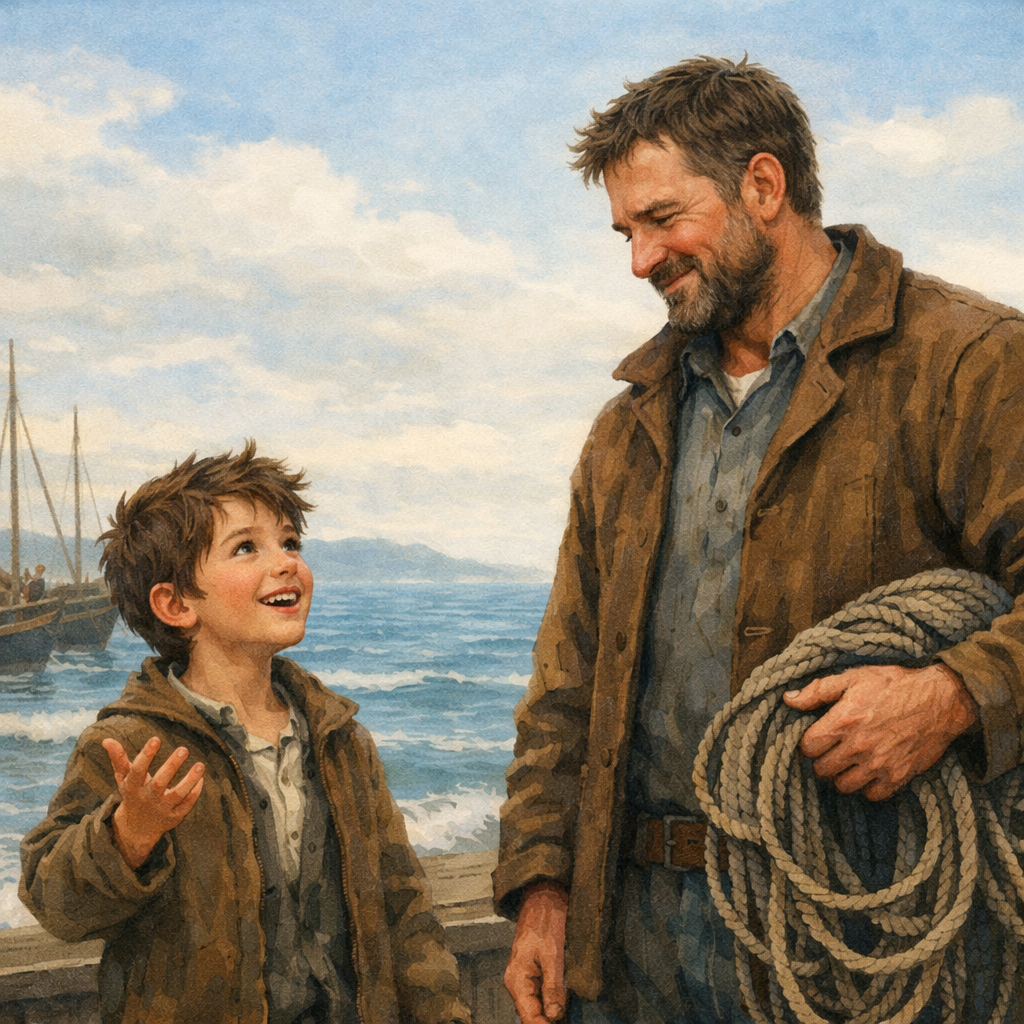
His father fished for a living.
Nick liked to make toys from driftwood and twine.
When he gave them to other children, he smiled.
He had bigger dreams.
His father shook his head.
“Toys don’t make a living,” he said gently. “The sea does.”
Nick looked out at the water.
The waves kept moving, steady and sure, whether he agreed with them or not.
When a trading ship came to port, Nick asked for work.
He was small, but he listened carefully.
He worked hard and learned quickly.
The sailors taught him knots, sails, and how to read the sky.
For the first time, Nick felt proud to belong to something larger than himself.
In Copenhagen, the harbor was loud and crowded.
Crates thudded. Bells rang. Voices shouted.
Nick glimpsed bright colors and tall buildings beyond the docks.
There was no time to explore or wander.
The ship needed unloading, and Nick worked until his arms ached.
Nick turned eight while still at sea.
He was stronger now, and taller, and braver than before.
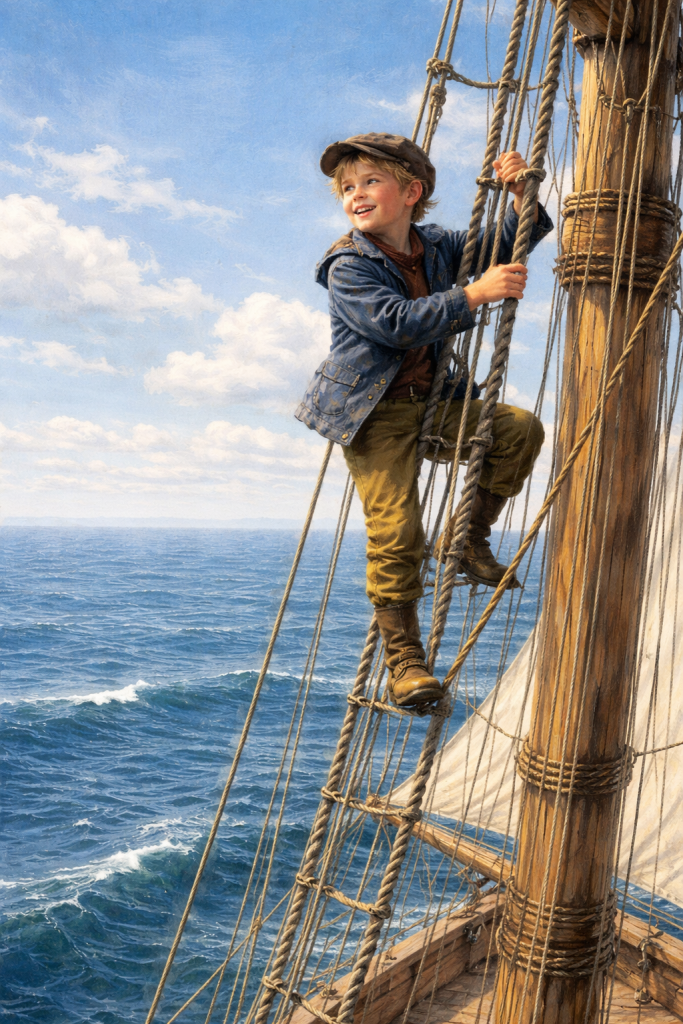
He could tie knots quickly and climb the rigging with ease.
Still, he was a child.
The ocean did not notice birthdays, or courage, or dreams.
The sky darkened without warning.
The wind rose and tore at the sails.
The ship pitched and groaned beneath Nick’s feet.
Waves climbed higher and higher, crashing over the deck.
The storm had found them, fierce and uninvited.
“Hold on!” someone shouted through the wind.
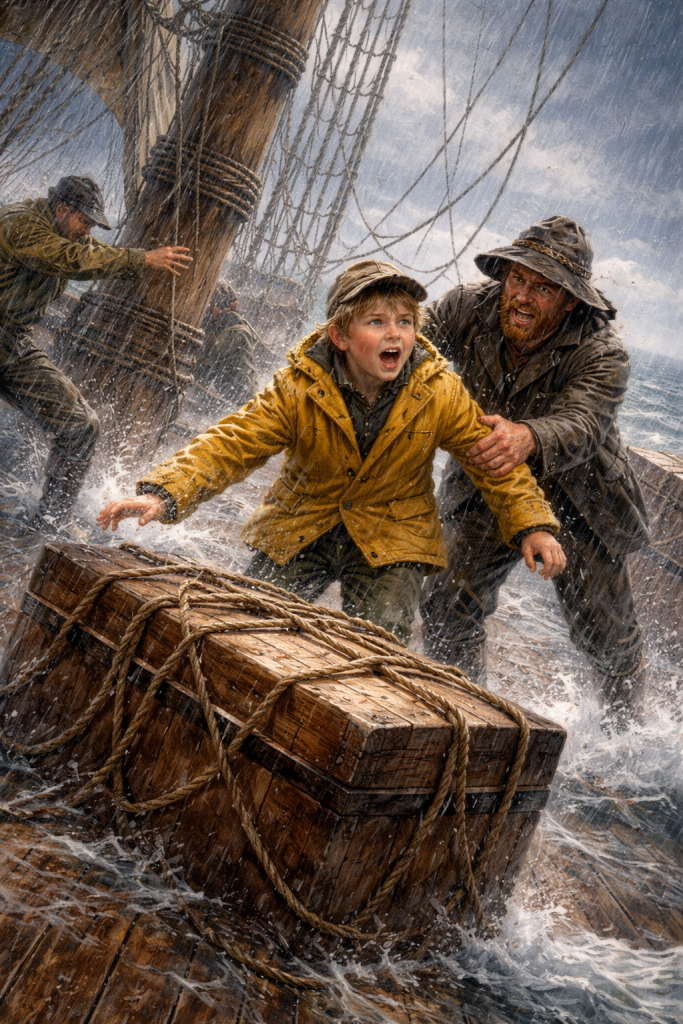
Nick was shoved toward a heavy cargo chest.
Water crashed across the deck.
Men slipped and ropes snapped loose.
The ship bucked wildly beneath them.
One by one, voices were torn away by the storm, leaving only the roar of the sea.
The mast split with a crack like thunder.
Wood shattered and rigging whipped through the air.
The cargo chest tore loose from the deck.
Nick grabbed the rope tied to it.
The sudden pull yanked him off his feet and over the side, dragging him into the freezing sea with the chest.
The ship was gone.
The shouting was gone.
Only waves remained.
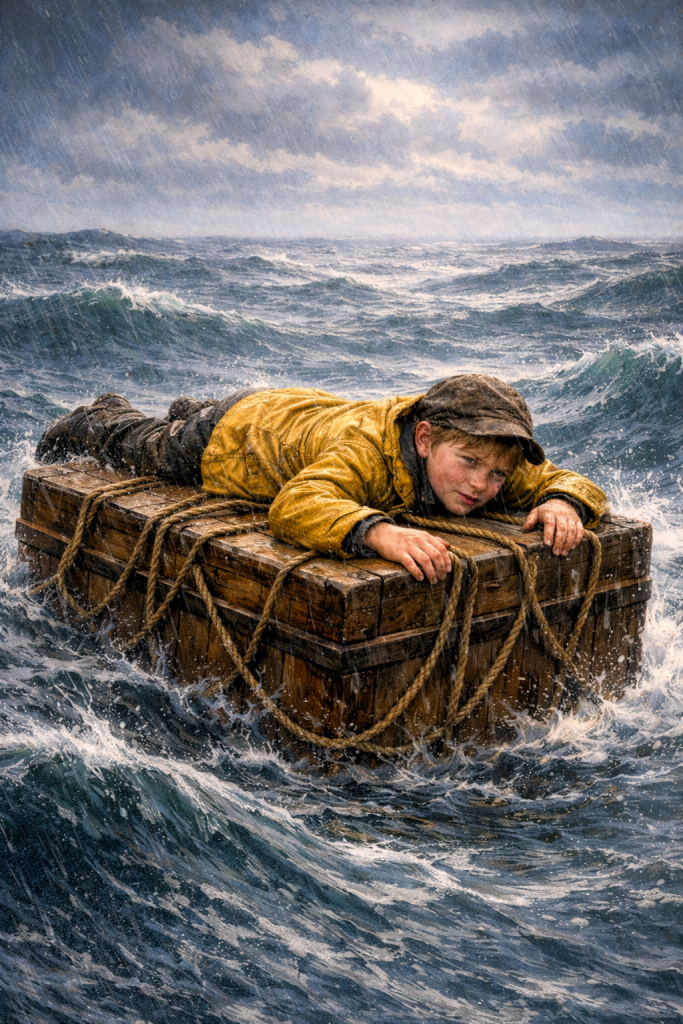
Nick clung to the rope and hauled himself onto the chest.
It bobbed wildly, slick with ice and spray.
The cold burned his hands and legs, but the chest stayed afloat.
For now, it was enough.
Then, without warning, the sea grew still.
The waves lowered themselves.
The wind slipped away.
The storm thinned, as if it had never been there.
Nick crouched on the chest, soaked and shaking, but the cold eased.
The water felt different now, calmer, almost watchful.
Exhaustion finally pulled Nick’s eyes closed.
The chest rocked gently beneath him.
When he woke, dawn light spread across the water.
The air felt warmer.
Below the surface, shapes moved—slow and steady.
Nick watched them circle once, then drift on, and for the first time, he was not afraid.The chest bumped softly against land.
Nick blinked and sat up.
Snow-covered rocks rose before him, bright in the morning light.
The sea had carried him safely through the night.
Cold waves no longer reached him.
Nick stepped onto solid ground, tired but alive, certain his journey was only beginning.